
Regular Surgical Masks do not stick tightly to the face when wearing them and so they allow some air to pass through without being filtered. This causes a clear risk of infection. N95 type masks fit close to the face, causing the air to pass from the outside in through all filters and this combined with the fact that N95 masks have much better filters give a clear, impressive and vital advantage.
N95 Respirator is made from polypropylene resins (melt blown nonwovens) similar to the material used to make Surgical masks. They consists of a 5-layer filtration system.
• The outermost layer is Spun bond with a density of 20-50 GSM( g/m2) which is exposed to outdoor air.
• The 2nd and 3rd layer is Melt blown, it is this layer that give maximum filtration.
• The 4th layer is hot air cotton that will trap charged particles. (Electrostatic attraction )
• The innermost layer is Spun bond for a comfortable fit. It is hypoallergenic and does not irritate the skin
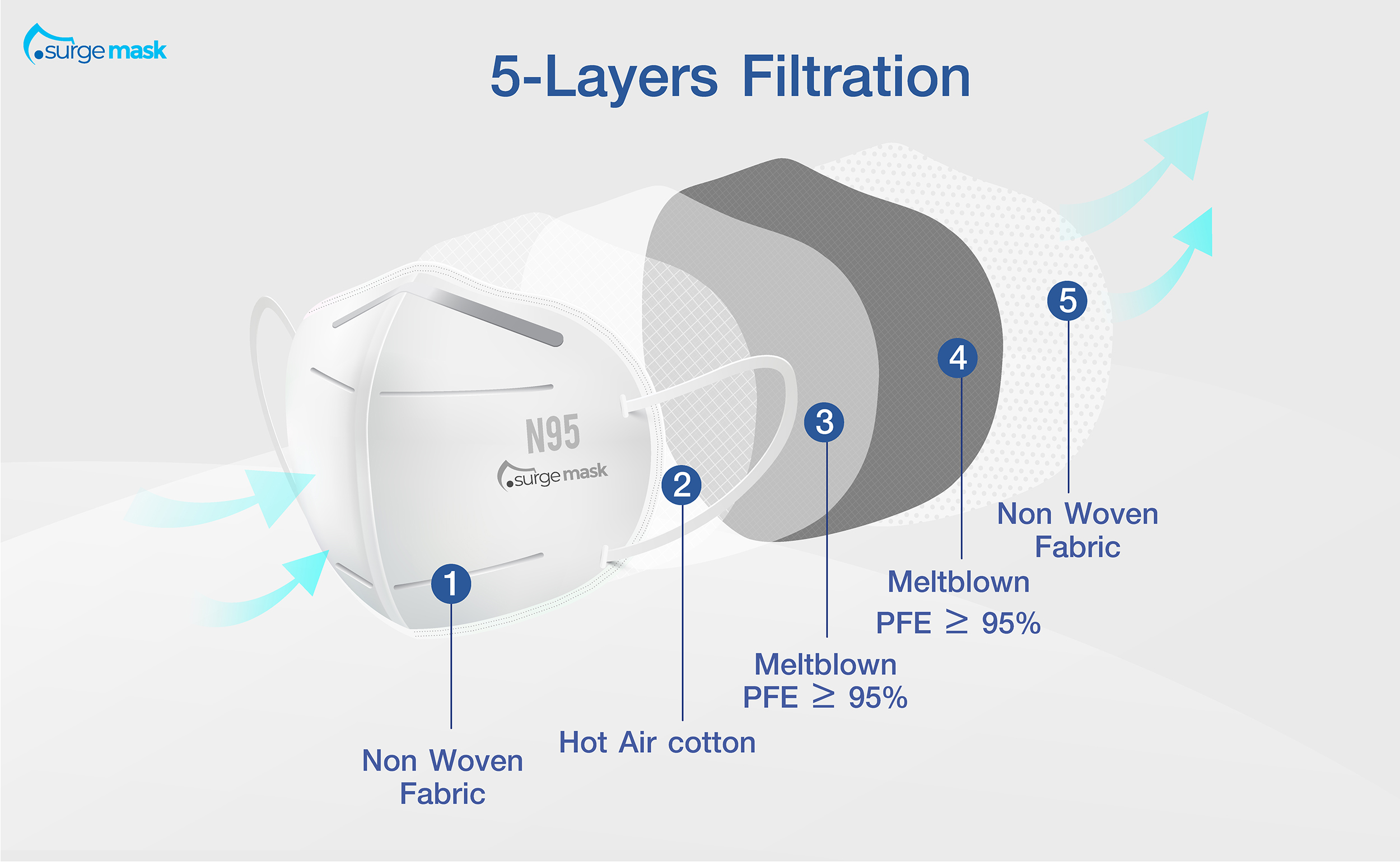
Figure 1. Shows the 5-layer filtration system of an N95 mask.
N95 masks are medical devices used to protect the wearer’s respiratory tract. They can filter at least 95% of particles 0.1-0.3 microns in size.The letter N comes from the word Non-resistant to oil-based particles, meaning it can filter particles or aerosols that do not contain oil. According to the NIOSH standard, the United States has standard levels divided into N95, N99, N100, which can filter particles 95%, 99%, 100%, respectively. N95, N99, N100 can be compared to the European standard (European Standard , EN149), with a filtration level at FFP2 more than 94% effective particle filtration, FFE3 more than 99% effective particle filtration, respectively.